
If you have spent any time exploring online audio production tutorials, you have undoubtedly encountered this pervasive rule: “Spotify normalizes music to -14 LUFS, so you must master your tracks to exactly -14 LUFS Integrated to prevent the streaming algorithm from ruining your sound.”
This is arguably the single most misunderstood concept in modern digital audio engineering. Blindly adhering to this advice is the primary reason why many independent releases sound thin, lifeless, and weak when played alongside commercial billboard reference tracks in consumer playlists.
How Streaming Normalization Actually Works (ITU-R BS.1770)
Loudness normalization standards (governed by recommendations like ITU-R BS.1770 and AES TD1004) were designed to solve an annoying listener problem: preventing sudden, jarring volume leaps when shifting between different songs or genres on digital streaming platforms (DSPs).
Crucially, the normalization algorithm applied by Spotify, Apple Music, and TIDAL is NOT a dynamic compressor or peak limiter:
- Linear Gain Adjustment Only: If you deliver a competitive Pop, EDM, or Hip-Hop master at -8 LUFS Integrated, Spotify does not smash your audio with a limiter. It simply applies a pure, linear gain reductionu2014turning down the virtual volume fader by 6 dB. The internal transient relationships, punch of the kick drum, and harmonic balance remain 100% identical.
- The Inherent Need for Density (Crest Factor): Modern genres rely fundamentally on soft clipping, saturation, and controlled micro-dynamics (a low crest factor) to deliver perceived punch, aggression, and glue. When a commercially dense track mastered at -8 LUFS is attenuated to -14 LUFS by Spotify, it still sounds massive, solid, and authoritative.
- The Danger of Intentionally Aiming for -14 LUFS: If you ease off your bus limiters and clippers to force a club track down to -14 LUFS, the streaming platform does not add analog density to your mix. Your track will simply play back sounding loose, overly dynamic, and noticeably deficient in energy compared to professional releases.
“Master for the aesthetic, energy, and competitive density of your musical genreu2014never master to appease an arbitrary playback normalization fader.”
Sponsored
Professional Mastering Guidelines for Streaming
- 1. Calibrate Against Commercial Genre References: Use A/B reference tools (like Metric AB) with loudness-matched monitoring. For modern electronic and pop, commercial masters routinely sit between -8 and -6 LUFS in energetic choruses. For acoustic, jazz, and cinematic music, target between -12 and -10 LUFS where natural dynamic breath is paramount.
- 2. Set True Peak Ceiling to -1.0 dBFS: When streaming platforms transcode high-resolution uncompressed WAV audio into lossy distribution codecs (OGG Vorbis, AAC), inter-sample peaks often overshoot 0 dBFS, creating harsh digital clipping distortion. Setting your final True Peak limiter ceiling to -1.0 dBFS True Peak (or at least -0.5 dBFS) guarantees pristine, distortion-free playback.
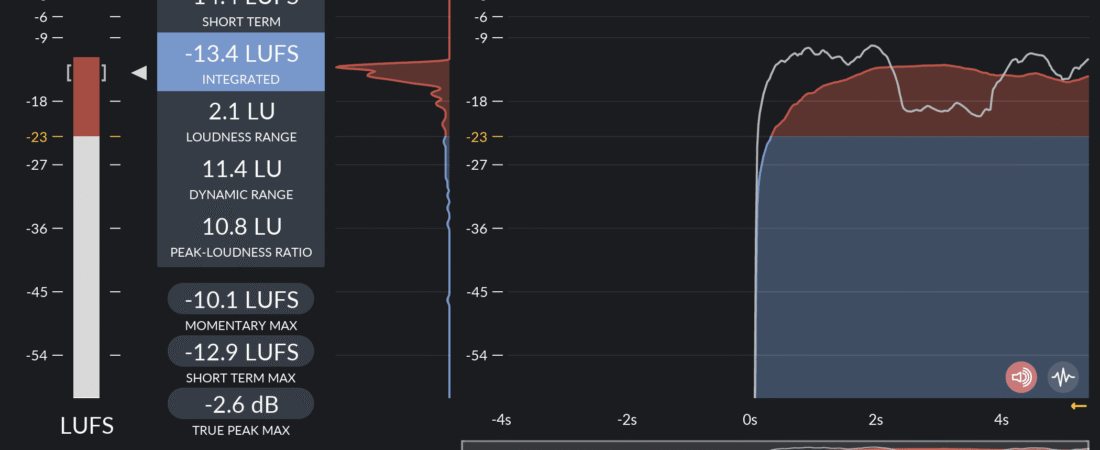
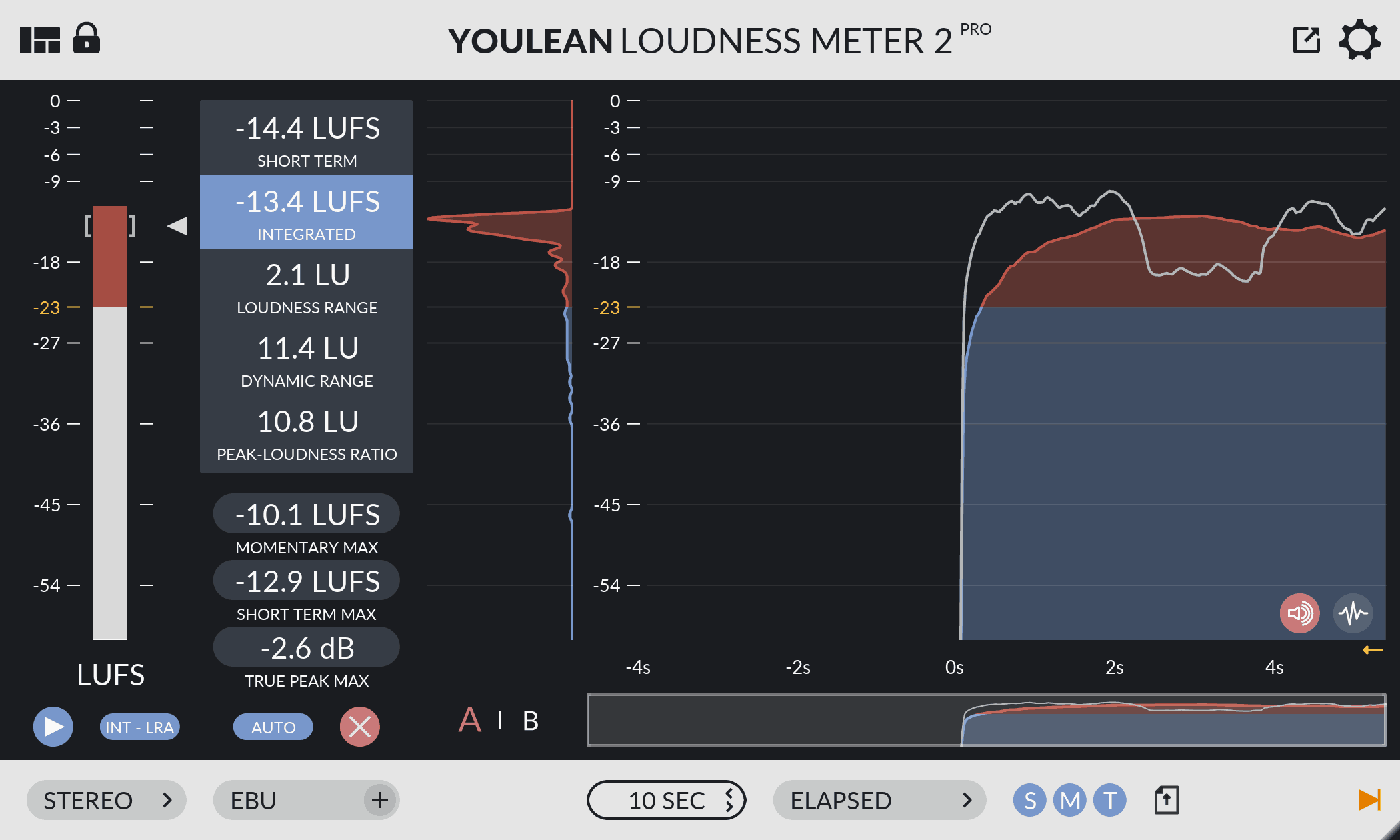
- 3. Deploy Precision Analytical Meters: Utilize industry-standard loudness meters such as the free, EBU R128-compliant Youlean Loudness Meter 2, iZotope Insight 2, or TC Electronic Clarity M. Track Integrated LUFS, Short-Term LUFS, and Loudness Range (LRA) across the entire duration of your arrangement.
Official Sources & References
- Spotify for Artists – Official Loudness Normalization & Mastering FAQ
- Audio Engineering Society (AES) – Recommendation for Loudness of Internet Audio Streaming (TD1004)
- Youlean – Official Technical Documentation & Meter Specifications
- Sound On Sound – The Truth About Loudness & Modern Streaming Metrics