
REAPER 7.69 Review: The Ultimate DAW for Sound Design and Electronic Music in 2026
REAPER (Rapid Environment for Audio Production, Engineering, and Recording) has solidified its position as one of the "silent giants" of the industry. While names like Ableton Live and FL Studio often dominate the marketing spotlight in electronic music, Cockos' software has attracted a loyal following of users seeking extreme efficiency and limitless customization.
DAW
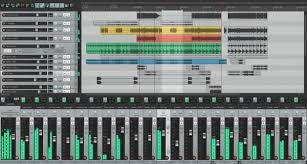
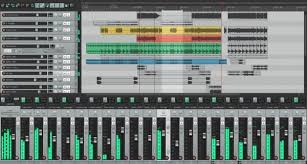
The Current State: REAPER 7.69
As of April 2026, we are currently on version 7.69. The 7.x series introduced changes that significantly modernized the workflow. Recent highlights include:
FX Containers: These allow you to create complex effect chains within a single "container," making parallel routing and saving multi-layered presets much easier.
Track Lanes and Swipe Comping: A revolution for recording vocals or instruments, allowing you to fluidly choose the best parts from multiple takes.
Advanced CLAP Support: REAPER was one of the first to fully adopt the CLAP (Clever Audio Plugin) format, ensuring better performance and features that VST3 doesn't always offer.
"Wag the DAW": The internal codename for recent updates reflects a focus on "under-the-hood" optimizations, keeping the DAW incredibly lightweight (the installer is still around 15MB).
REAPER for Electronic Music: Is it worth it?
Unlike Ableton Live, REAPER wasn't specifically designed for live performance or a "loop-based" focus. However, it is a formidable tool for composition and arrangement for several reasons:
Unlimited Routing: You can send audio or MIDI from anywhere to anywhere. Want to set up complex sidechaining? Just drag the routing button from one track onto a plugin in another.
Performance: Because it is so lightweight, it handles hundreds of instances of heavy synthesizers (like Serum, Vital, or Phase Plant) with much more stability than other DAWs.
Modernized MIDI: While the MIDI editor has a more "classic" aesthetic, the editing tools, scripts (such as those from ReaPack), and the ability to customize shortcuts allow you to program beats and melodies with incredible speed.
Note: REAPER does not come with a built-in sound library or "flashy" native synthesizers. If you are a beginner without third-party plugins (VSTs), you will need to invest in external instruments or find free alternatives.
The Sound Design Paradise
While it’s "very good" for electronic music, in Sound Design, REAPER is considered by many to be the gold standard, competing directly with—and often beating—Pro Tools.
Subprojects: You can nest a REAPER project inside another. This is vital for sound designers creating complex assets: you edit an explosion in the subproject, and it automatically updates in the main timeline of the film or game.
Batch Converter: Need to convert 500 audio files, normalize them, and rename them according to metadata? REAPER does it in seconds.
Scripts and JSFX: The community develops specific tools for sound design (like noise generators, randomizers, and spectral editors) that integrate directly into the software.
Razor Edits: Allows for precise selections across multiple tracks simultaneously, facilitating complex layering of sound assets.
Verdict
REAPER is the ideal choice if you value freedom. It doesn't impose a workflow on you; you mold the interface and functions to work your way.
Is it good for electronic music? Yes, especially if you already have your favorite plugins and prefer a stable, fast environment.
Is it good for Sound Design? It is arguably the best tool on the market today, offering automation and batch processing features that save hours of work.
If you are looking for a DAW that comes "party-ready" with samples and synths, REAPER might seem intimidating at first. But if you want a definitive professional tool that will never crash in the middle of a heavy project, version 7.69 is a mandatory download.
REAPER (Rapid Environment for Audio Production, Engineering, and Recording) has solidified its position as one of the "silent giants" of the industry. While names like Ableton Live and FL Studio often dominate the marketing spotlight in electronic music, Cockos' software has attracted a loyal following of users seeking extreme efficiency and limitless customization.
Here is an updated overview of the DAW in 2026 and how it performs for production and sound design.
Cycles Audio© 2026
Subscribe
Subscribe to our newsletter.
We care about your data in our privacy policy.